

An AC fan problem can disrupt your cooling system, leaving your home uncomfortable during hot weather. Whether your fan isn't spinning, is making strange noises, or has stopped working altogether, understanding the causes and solutions can save time and money. For professional assistance with such issues, consider AC repair Tempe for expert troubleshooting and long-term solutions. This guide will help you identify the issue, troubleshoot common problems, and know when to call a professional for help.
- How to Spot an AC Fan Problem
- Signs of an AC Fan Problem
- Differences Between Indoor and Outdoor Fan Problems
- Common Causes of an AC Fan Not Spinning
- Power Issues
- Capacitor Failure
- Burnt-Out Fan Motor
- Contactor or Switch Malfunctions
- Clogged Air Filters Restricting Airflow
- Obstructions: Dirt, Debris, or Physical Blockages
- Broken Belts in Older AC Units
- Step-by-Step Troubleshooting Guide
- Safely Check for Power Supply Issues
- Reset the AC Fan and Control Board
- Identify and Address Capacitor Problems
- Preventive Maintenance Tips for Your AC System
- When to Call an HVAC Professional
- Situations Requiring Expert Help
- Risks of DIY Fixes for Complex Problems
- Benefits of Professional Service for Long-Term Efficiency
- Keep Your AC Running Smoothly with Regular Care
- Frequently Asked Questions
- Why is my AC fan not spinning but humming?
- How can I reset my AC fan?
- How often should I replace my air filter?
- What causes an AC fan motor to burn out?
- Is it safe to troubleshoot AC fan problems myself?
- Schedule Your AC Fan Repair Today

How to Spot an AC Fan Problem
Recognizing the signs of an AC fan problem early can prevent more extensive damage to your cooling system. Whether the issue is with the indoor or outdoor fan, paying attention to these symptoms can help you decide on the next steps.
Signs of an AC Fan Problem
Understanding the signs of an AC fan problem can help you act before the issue worsens. If your system is not cooling correctly or making unusual noises, the fan could be the culprit. Below are some common symptoms to look out for:
- No Airflow: If your AC is running but no air comes through the vents, it could mean the fan is not spinning or is blocked.
- Strange Noises: Humming, clicking, or rattling sounds often point to issues with the motor, capacitor, or obstructions.
- Overheating: A warm or hot AC unit suggests that the fan motor may be struggling or has stopped functioning.
- Uneven Cooling: The fan might not distribute air properly if some areas of your home feel warm while others are cool.
- Frequent Shutdowns: The system shutting off unexpectedly may indicate an overloaded or failing fan motor.
Differences Between Indoor and Outdoor Fan Problems
The type of fan experiencing trouble determines how the problem affects your AC system. Knowing these differences can guide you in identifying the issue more accurately.
- Indoor Fan Issues: The blower fan inside your home pushes cool air through the ducts. Problems like clogged air filters, motor failure, or blocked vents can restrict airflow and affect cooling.
- Outdoor Fan Issues: The outdoor unit's fan removes heat from the system. If this fan stops working, your AC may run but fail to cool effectively. Common causes include motor burnout, capacitor failure, or debris blocking the fan.
Common Causes of an AC Fan Not Spinning
Several factors can cause your AC fan to stop spinning, affecting the cooling efficiency of your system. Understanding these common causes can help you troubleshoot and decide if professional assistance is required.
Power Issues
A lack of power is a common reason for AC fan problems. A tripped circuit breaker or blown fuse can cut power to the fan, requiring a reset or replacement. Loose electrical connections can also disrupt the fan motor's function and should be checked by a professional.
Capacitor Failure
Capacitors help start and run the fan motor, and when they fail, the fan may hum but not spin. A start capacitor provides the initial power, while a run capacitor keeps the motor running. Signs of failure include clicking noises or inconsistent performance, requiring professional replacement.
Burnt-Out Fan Motor
Over time, the fan motor can burn out due to overheating or poor maintenance. Clogged air filters, lack of lubrication, and continuous use can speed up wear and tear. If the motor fails, replacing it is necessary to restore airflow.
Contactor or Switch Malfunctions
The contactor controls power to the fan motor, but dirt or wear can cause it to fail. A stuck switch may stop the fan from receiving electricity. A technician can clean or replace the contactor to restore function.
Clogged Air Filters Restricting Airflow
Dirty air filters can block airflow, forcing the fan to work harder and causing strain on the motor. Restricted airflow can also lead to ice buildup on the coils. Replacing air filters every 1-3 months helps maintain efficiency.
Obstructions: Dirt, Debris, or Physical Blockages
Dirt, dust, and debris can stop the fan blades from spinning properly. Outdoor units may collect leaves or twigs, while indoor vents can clog with dust. Regular cleaning of both areas prevents airflow issues.
Broken Belts in Older AC Units
Older AC units use belts to drive the fan motor; over time, these can wear out or break. A damaged belt can prevent the fan from spinning, but replacing it is usually a simple fix. Frequent belt issues may indicate it's time for a system upgrade.

Step-by-Step Troubleshooting Guide
Troubleshooting an AC fan problem can help identify whether the issue is something you can handle or requires professional repair. Always prioritize safety when working with electrical components.
Safely Check for Power Supply Issues
Power disruptions are a common cause of AC fan problems. Follow these steps to check the power supply:
- Inspect the Circuit Breaker: Check your breaker box for tripped breakers. Reset any that have been tripped.
- Check the Fuse Box: If your system uses fuses, inspect them for signs of damage or burning. Replace blown fuses.
- Look for Loose Wires: Ensure all wires connected to the unit are secure. Avoid touching exposed wires, as they can be hazardous.
Reset the AC Fan and Control Board
Sometimes, resetting the system can resolve minor glitches caused by power surges or software errors.
- Turn Off the Thermostat: Switch your thermostat to the "off" position.
- Shut Down Power: Turn off the breaker or disconnect power to the unit completely.
- Wait for 5 Minutes: Allow the system to reset fully.
- Restore Power: Turn the breaker back on or reconnect power.
- Restart the Thermostat: Set your thermostat to the desired temperature and mode.
Identify and Address Capacitor Problems
Capacitors are essential for starting and running the fan motor. If you suspect a capacitor issue:
- Look for Symptoms: Listen for a humming sound or observe if the fan blades attempt to move but fail.
- Test the Capacitor: Use a multimeter to check if the capacitor functions correctly. This should only be done by a professional due to safety risks.
- Replace If Necessary: If the capacitor is damaged or weak, it must be replaced. A licensed HVAC technician should always handle this task.
Preventive Maintenance Tips for Your AC System
Preventive maintenance is essential for keeping your AC system efficient and avoiding costly repairs. Cleaning, timely inspections, and proper airflow are simple yet effective ways to maintain optimal performance. Below is a comparison of the key preventive maintenance tasks and their benefits:
| Maintenance Task | What to Do | Frequency | Benefits |
| Clean vents and fan blades | Dust vents and wipe fan blades to remove dirt and debris. | Monthly | It improves airflow and reduces strain on the fan motor. |
| Clean outdoor unit | Clear leaves, twigs, and debris around the outdoor unit. | Monthly | It prevents overheating and ensures proper airflow. |
| Replace air filters | Swap out old filters with clean ones. | Every 1-3 months | It enhances airflow, reduces allergens, and prevents motor strain. |
| Schedule professional tune-ups | Hire a technician to inspect and service your AC unit. | Annually | Identifies issues early, optimizes performance, and extends system life. |
| Ensure proper airflow | Keep two feet of clearance around the outdoor unit. | Monthly | Maintains cooling efficiency and prevents overheating. |
When to Call an HVAC Professional
While some AC fan problems can be resolved with simple troubleshooting, others require the expertise of a licensed HVAC professional. Knowing when to seek professional help can save you time, money, and potential safety risks.
Situations Requiring Expert Help
Specific issues are too complex or dangerous to fix and should be handled by a professional. These include:
- Motor Repairs or Replacements: If the fan motor is burnt out or severely damaged, a professional can replace it safely.
- Capacitor Replacements: Handling capacitors is risky due to the electrical charge they store. A technician has the tools and knowledge to replace them without harm.
- Electrical Problems: Issues with wiring or the contactor require specialized skills to ensure safety and proper repair.
- Persistent Problems: If troubleshooting steps don't fix the issue, a technician can diagnose more thoroughly.
Risks of DIY Fixes for Complex Problems
Attempting to repair complicated AC fan problems alone can lead to more harm than good.
- Safety Hazards: Working with electrical components like capacitors or wiring can result in shocks or injuries.
- Worsening the Issue: Incorrect repairs can cause further damage to the AC system, leading to higher repair costs.
- Voiding Warranties: DIY repairs may void warranties on your AC unit, leaving you responsible for the full cost of future maintenance.
Benefits of Professional Service for Long-Term Efficiency
Hiring an HVAC professional ensures your system is repaired correctly and continues to perform efficiently.
- Accurate Diagnosis: Professionals use specialized tools to pinpoint the exact problem, saving time and effort.
- High-Quality Repairs: Technicians use durable parts and follow proper procedures to ensure long-lasting repairs.
- Improved Efficiency: A well-maintained system runs more efficiently, reducing energy costs and wear on components.
- Peace of Mind: Knowing your system has been repaired safely and correctly provides confidence in its performance.
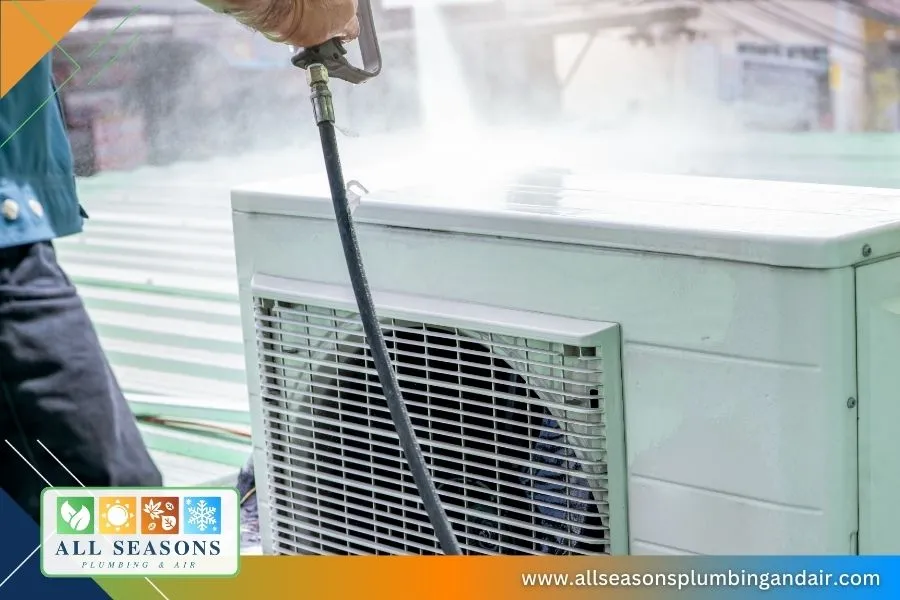
Keep Your AC Running Smoothly with Regular Care
Regular maintenance is essential to avoid an AC fan problem and ensure your cooling system operates efficiently. Cleaning vents, replacing air filters, and scheduling professional tune-ups can help prevent airflow restrictions, reduce energy costs, and extend the life of your AC unit. For trusted solutions, rely on All Season Plumbing And Air. Our skilled technicians are ready to provide expert maintenance and repairs to keep your home comfortable year-round.
Frequently Asked Questions
Why is my AC fan not spinning but humming?
A humming sound from your AC fan usually points to a capacitor or motor issue. These components may fail to provide enough power to spin the fan. Professional repair is recommended to resolve the problem safely.
How can I reset my AC fan?
To reset your AC fan, turn off the thermostat and power supply at the breaker, wait five minutes, and then restore power. If the fan still doesn't work, it might require professional attention.
How often should I replace my air filter?
Air filters should be replaced every 1-3 months, depending on usage and environmental factors like dust and pets. Regular replacement improves airflow and reduces strain on the fan motor.
What causes an AC fan motor to burn out?
Fan motors can burn out due to clogged air filters, overheating, or lack of maintenance. Regular care helps prevent these issues and extends the motor's life.
Is it safe to troubleshoot AC fan problems myself?
Basic tasks like cleaning vents or checking the power supply are safe. It's best to call a licensed HVAC technician for electrical components like capacitors to avoid safety risks.
Schedule Your AC Fan Repair Today
If you're dealing with an AC fan problem, don't wait for it to worsen. Contact All Season Plumbing And Air for fast, reliable repairs and expert maintenance. Our licensed technicians are equipped to handle everything from capacitor replacements to motor repairs, ensuring your AC system runs efficiently. Call us today at (623) 462-0357 to schedule your service and keep your home comfortable all year.

All Season Plumbing And Air
3010 N 67th Pl suite#106, Scottsdale, AZ 85251


